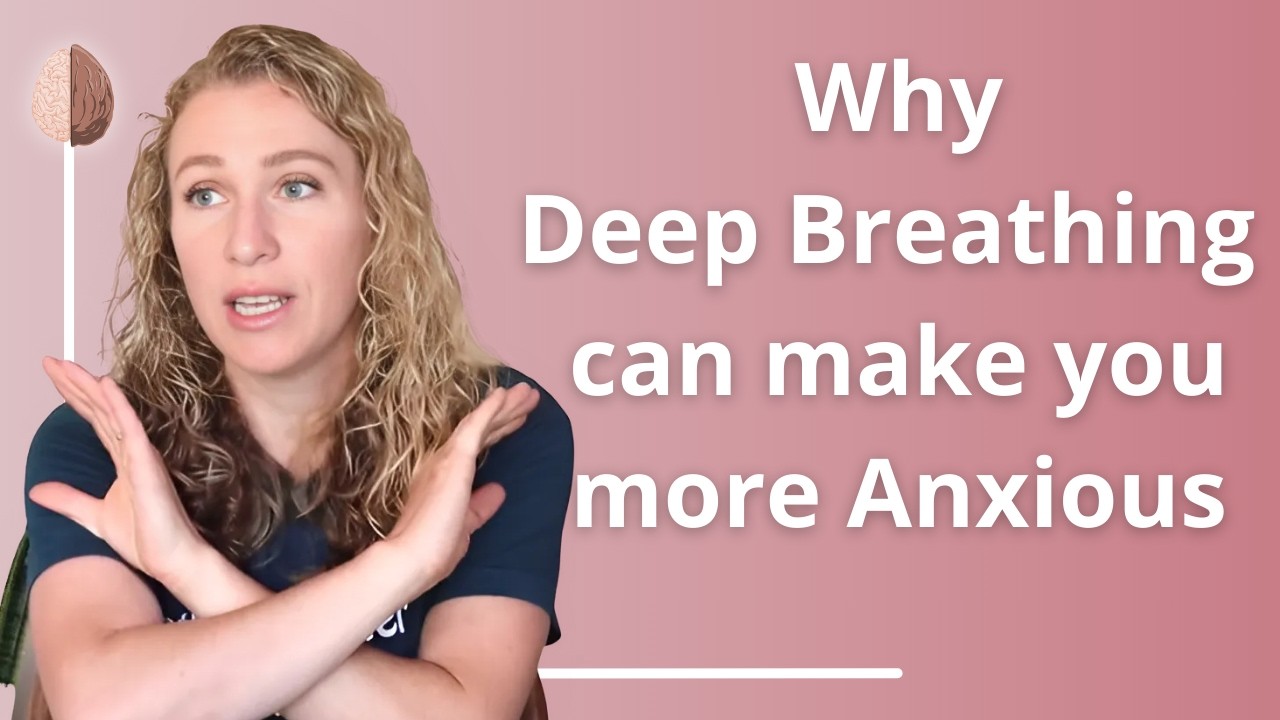
Why Anxious People Shouldn't Use Deep Breathing
TL;DR
Deep breathing backfires for anxious people because forcing a large inhale causes hyperventilation, dropping CO2 and potentially triggering panic attacks.
Key Points
- 1.Deep breathing can trigger panic in anxious people. Anxious individuals tend to gulp air when told to breathe deeply, causing hyperventilation, a drop in CO2 and nitric oxide, dizziness, tingling, and potentially a full panic attack.
- 2.Slow breathing with a longer exhale is the recommended alternative. Rather than forcing a deep inhale, gently extend the exhale longer than the inhale through the nose, with a brief pause, to naturally activate the parasympathetic calming response.
- 3.Research confirms slow breathing outperforms deep breathing for anxiety disorders. Studies consistently show slow breathing reduces symptoms of anxiety, panic disorder, and PTSD-related hyperarousal without the risk of over-breathing.
- 4.If breathing changes trigger panic, shift from control to acceptance. Turn up the 'willingness dial' instead of the 'control dial' — acknowledge sensations are safe, and get curious about them like a scientist rather than fighting them.
Continue yapping less
 14:44
14:44Therapy in a Nutshell
Micro Habits to Regulate Depression or Trauma (Shutdown Response)
 19:44
19:44Therapy in a Nutshell
4 Types of Overthinking and How to Stop Them - Worry, Intrusive Thoughts, Rumination, Over-Analyzing
 8:27
8:27Therapy in a Nutshell
Meditation for Chronic Pain- Somatic Tracking Exercise to Replace Fear with Curiosity
 0:37
0:37Therapy in a Nutshell
Self Help Won't Heal You
 26:16
26:16Nutrition Made Simple!
3 Ways Poor Sleep Is Destroying Your Heart (Backed by Science)
 11:18
11:18Bob & Brad
Never Foam Roll Your Lower Back Like This!
 1:17:27
Rich Roll
A Recovering Addict's Honest Experience With Psychedelic Therapy
 5:37
5:37Psych2Go
Hidden Struggles Behind Anxiety and Depression
Life's too short for long videos.
Summarize any YouTube video in seconds.
Quit Yapping — Try it Free →