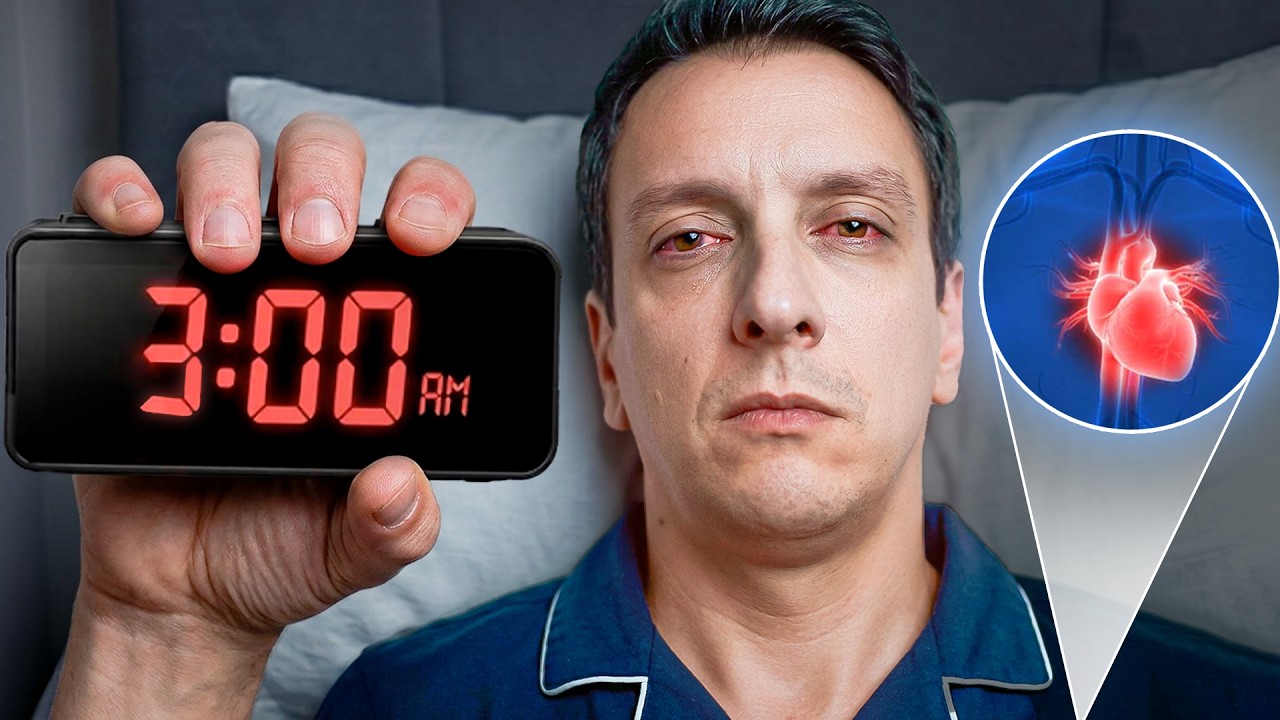
3 Ways Poor Sleep Is Destroying Your Heart (Backed by Science)
TL;DR
Poor sleep quality, fragmented sleep, and circadian misalignment each independently double heart disease risk — regardless of total sleep hours.
Key Points
- 1.Sleep quality matters more than quantity for heart health. Large studies using polysomnography found women with fragmented sleep had up to twice the heart disease mortality risk — even when total sleep hours were identical to those without fragmented sleep.
- 2.The 8-hour rule is a myth that oversimplifies individual sleep needs. Most adults need 7–9 hours, but rare genetic 'natural short sleepers' function well on 4–6 hours; the real signal is whether you wake up naturally feeling rested.
- 3.Circadian misalignment raises blood pressure and inflammatory markers independent of sleep duration. A controlled experiment inverting participants' sleep schedules showed harmful physiological effects even when total hours slept remained the same.
- 4.Social jet lag — sleeping late on weekends to recover — does not work. A trial restricting sleep to 5 hours then allowing weekend recovery showed participants gained nearly 1.5 kg and had elevated insulin resistance comparable to those with no recovery at all.
- 5.Night owls face elevated disease risk largely because society forces circadian misalignment on them. A study of 65,000 nurses found night owls had the highest diabetes risk during daytime shifts, while early birds suffered most from night shifts — matching chronotype to schedule was protective.
- 6.The top evidence-based sleep strategies address timing, environment, and substances. Key interventions include consistent bed/wake times within 30–60 minutes daily, morning sunlight within an hour of waking, bedroom temperature of 17–20°C, and stopping caffeine at least 8 hours before bed.
- 7.Insomnia worsens when you spend excessive time awake in bed. The counterintuitive evidence-based fix is to delay bedtime until nearly nodding off and immediately leave bed upon waking; one family member reduced sleep medication significantly within weeks of applying this approach.
Continue yapping less
 21:40
21:40Nutrition Made Simple!
Scientists Say These 5 Things Prevent Dementia (Do Them Now)
 14:21
14:21Nutrition Made Simple!
The REAL 7 Levels of Eating That Transform Your Health (Backed by Science)
 5:06
5:06Nutrition Made Simple!
Real Madrid Players´ Glucose Level Shocked Scientists
 0:57
0:57Nutrition Made Simple!
The Wondrous Benefits of Cocoa & Chocolate
 11:18
11:18Bob & Brad
Never Foam Roll Your Lower Back Like This!
 4:55
4:55Therapy in a Nutshell
Why Anxious People Shouldn't Use Deep Breathing
 1:17:27
Rich Roll
A Recovering Addict's Honest Experience With Psychedelic Therapy
 5:37
5:37Psych2Go
Hidden Struggles Behind Anxiety and Depression
Life's too short for long videos.
Summarize any YouTube video in seconds.
Quit Yapping — Try it Free →