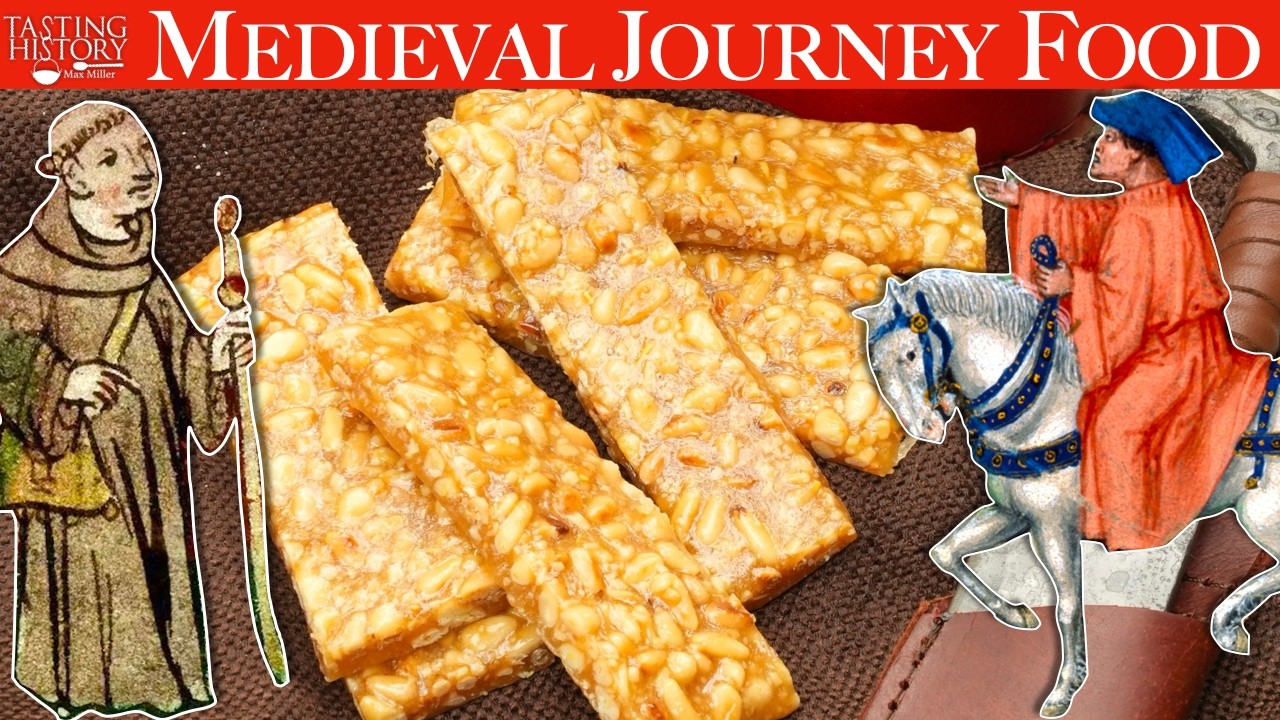
What Did Medieval People Eat On A Journey?
TL;DR
Medieval travelers relied on portable, non-perishable foods like hardtack, candy, cheese, and meat pies, planned carefully around inns and monasteries.
Key Points
- 1.Medieval people traveled far more than commonly assumed. Merchants, pilgrims, monks, knights, and diplomats regularly crossed continents on foot (15–30 miles/day), by horse (30–40 miles/day), or by boat, often combining all three methods.
- 2.Travelers were advised to bring their own portable, non-perishable food. Documents like 'The Canterbury Tales' list meat pies and cakes; a Spanish notary packed marzipan and honey-nut nougat; William Wey's Jerusalem packing list included biscuit (hardtack), cheese, bacon, raisins, rice, and spices.
- 3.Payn ragoun was an ideal travel food: a 14th-century pine nut and ginger candy. From 'The Forme of Cury' (c.1390), it combines equal weights of honey, sugar, and pine nuts with powdered ginger, cooked to soft-crack stage (270–290°F) for a chewy, long-lasting confection.
- 4.Road conditions and safety were serious concerns for medieval travelers. King Edward I's 1285 decree required 200 feet of cleared land on each side of highways to prevent ambushes; laws even prohibited digging wells in roads after travelers drowned in disguised potholes.
- 5.Inns varied wildly in quality and safety, and some posed real dangers. A 1330s merchant enjoyed eels and flounder in Nottingham, but a 1370 medical treatise by John Arderne described a sleep-inducing powder that innkeepers could use to drug and rob pilgrims.
- 6.Monasteries offered structured hospitality to travelers under the Rule of St. Benedict. The Abbey at Cluny gave arriving pilgrims a pound of bread and wine on day one, half portions on day two, then a farewell penny — though visits were tracked to once per year.
- 7.Pilgrims sailing to Jerusalem faced severe food challenges at sea. Friar Felix Fabri recommended two jars of wine, smoked meats, cheese, oil, almonds, and 'huge quantities of biscuit,' calling hardtack a 'desert currency'; William Wey advised three 10-gallon barrels (two wine, one water) and bringing live chickens aboard the galley.
Continue yapping less
 22:55
22:55Tasting History with Max Miller
The Boston Tea Party: The Truth Behind the Protest
 23:03
23:03Tasting History with Max Miller
Pocket Soup for the 18th Century Traveler
 29:05
29:05Tasting History with Max Miller
Feeding the Last Tsar of Russia - Pelmeni for Nicholas II
 21:34
21:34Tasting History with Max Miller
The Oldest Recipe in History - Hammurabi's Kanasu Stew
 17:06
17:06Kings and Generals
Rise and Fall of Medieval Mercenaries - Middle Ages DOCUMENTARY
 18:09
18:09Joe Scott
Perhaps The Craziest Thought Any Human Has Ever Had
 21:19
21:19The B1M
Inside Berlin's Abandoned Cold War Airport
 11:39
11:39Mark Felton Productions
Battalion of the Damned - Waffen-SS Unit Vietnam War
Life's too short for long videos.
Summarize any YouTube video in seconds.
Quit Yapping — Try it Free →