T
Tasting History with Max Miller·History & GeopoliticsFeeding the Last Tsar of Russia - Pelmeni for Nicholas II
TL;DR
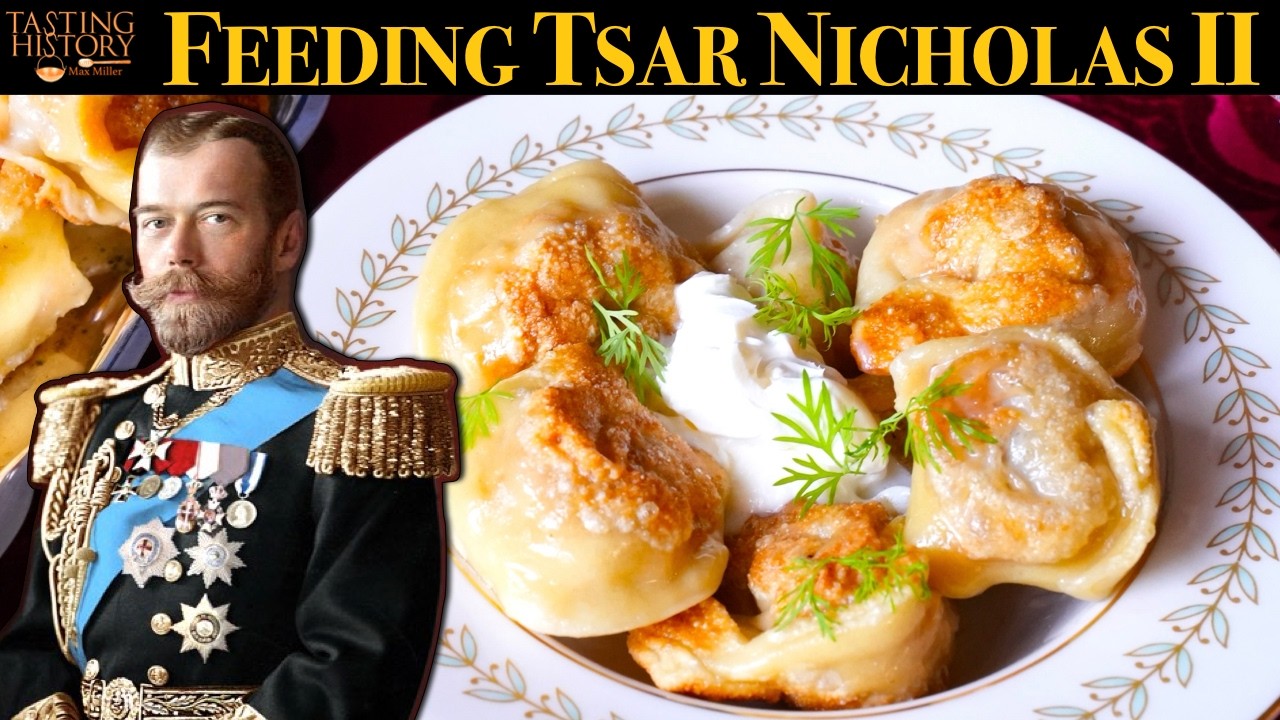
Nicholas II preferred simple Russian dishes like Siberian pelmeni over imperial French cuisine, reflecting his paradoxically modest personal tastes despite absolute autocratic rule.
Key Points
- 1.Nicholas II ruled Russia from 1894 until forced abdication in 1917. His poor military decisions in the Russo-Japanese War and WWI, combined with refusal to surrender autocratic power, accelerated revolution and led to his family's murder in 1918.
- 2.The Imperial court cuisine was predominantly French, not Russian. Menus were printed in French, most cooks were French-trained, and head chef Pierre Cubat was French — yet Nicholas privately preferred traditional Russian dishes like pirozhki and pelmeni.
- 3.The pelmeni recipe comes from Elena Molokhovets's 1861 cookbook 'A Gift to Young Housewives.' It calls for 1.5 lbs beef, one onion, salt, and pepper for filling, with dough made from 450g flour, 2 eggs, salt, and 120ml water — yielding exactly 40 dumplings.
- 4.Nicholas ate surprisingly simply for a tsar. Daily breakfast was rye bread, butter, boiled eggs, and ham; lunch was boiled beets, potatoes, and roast pork; he disliked caviar after overexposure during a Siberian train journey.
- 5.Tsarina Alexandra preferred near-vegetarian food but obsessed over baked goods. She complained that Russian court tea never varied — always bread, butter, and plain biscuits — contrasting with the elaborate English afternoon teas she grew up with under Queen Victoria.
- 6.The Alexander Palace had no dedicated dining room, and food arrived cold. Kitchens were 500+ feet away to prevent noise, odor, and fire risk; food traveled by trolley and only became lukewarm after an underground tunnel was built in 1902.
- 7.Formal banquets featured elaborate service rituals and gossip-collecting footmen. Chosen for height and looks from the Imperial Army, footmen wore silent soft shoes; the tsar's own footman, inherited from his father, was so elderly and nearly blind that Nicholas had to steady his arm while he poured wine.
- 8.In their final weeks before execution, the Romanovs cooked their own bread. Nicholas's diary entry from June 1918 describes daughters learning to knead dough; by July the family survived on soldier's rations of cabbage soup and bread until their murder on July 17, 1918.
Life's too short for long videos.
Summarize any YouTube video in seconds.
Quit Yapping — Try it Free →