R
ReligionForBreakfastWhat Are Gog and Magog?
TL;DR
Gog and Magog are ancient symbolic enemies from Ezekiel, repeatedly reinterpreted to represent whatever nation each era feared most.
Key Points
- 1.In Ezekiel 38–39 (570s BCE), Gog is a mysterious ruler from "the land of Magog," leading a coalition including Persia, Libya, and Anatolian kingdoms like Meshek and Tubal to invade Israel, only to be destroyed by God's earthquakes, fire, and plague.
- 2.Gog has no confirmed historical identity — the best candidate is King Gyges of Lydia (Assyrian: "Gugu"), but he never ruled the coalition Ezekiel describes and died before the exile when Ezekiel was written.
- 3.The Greek Septuagint mistranslated "Nesi Rosh" (chief prince) as "prince of Ros," implying a kingdom named Ros — and 19th-century scholar Wilhelm Gesenius wrongly linked this to Russia, with Meshek and Tubal mapped to Moscow and Tobolsk.
- 4.By the Dead Sea Scrolls era, Gog and Magog had become stock apocalyptic villains — the War Scroll places Gog in a cosmic battle between the "Sons of Light" and demonic forces, possibly identifying him with Satan-figure Belial or the Romans.
- 5.Revelation 20 drops Ezekiel's specific geography entirely, using "Gog and Magog" as a collective symbol for all rebellious nations at the four corners of the earth who follow Satan after his thousand-year imprisonment.
- 6.Hal Lindsey's 1970 bestseller *The Late Great Planet Earth* (tens of millions of copies sold) popularized the Russia = Gog interpretation for modern evangelicals, directly influencing Ronald Reagan, who in 1971 stated Russia "fits the description of Gog perfectly."
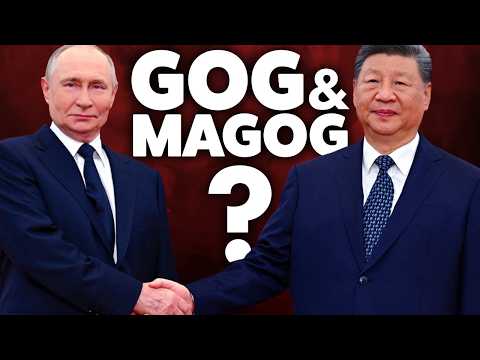
- 7.The pattern repeats across history — Martin Luther identified Gog as the Ottoman Turks in his 1530 German Bible, and today online communities debate whether Russia or China fulfills the prophecy, showing Gog functions as a flexible symbol refilled with each era's greatest enemy.
Life's too short for long videos.
Summarize any YouTube video in seconds.
Quit Yapping — Try it Free →