E
Economics Explained·News & PoliticsCan Anyone Save Europe?
TL;DR
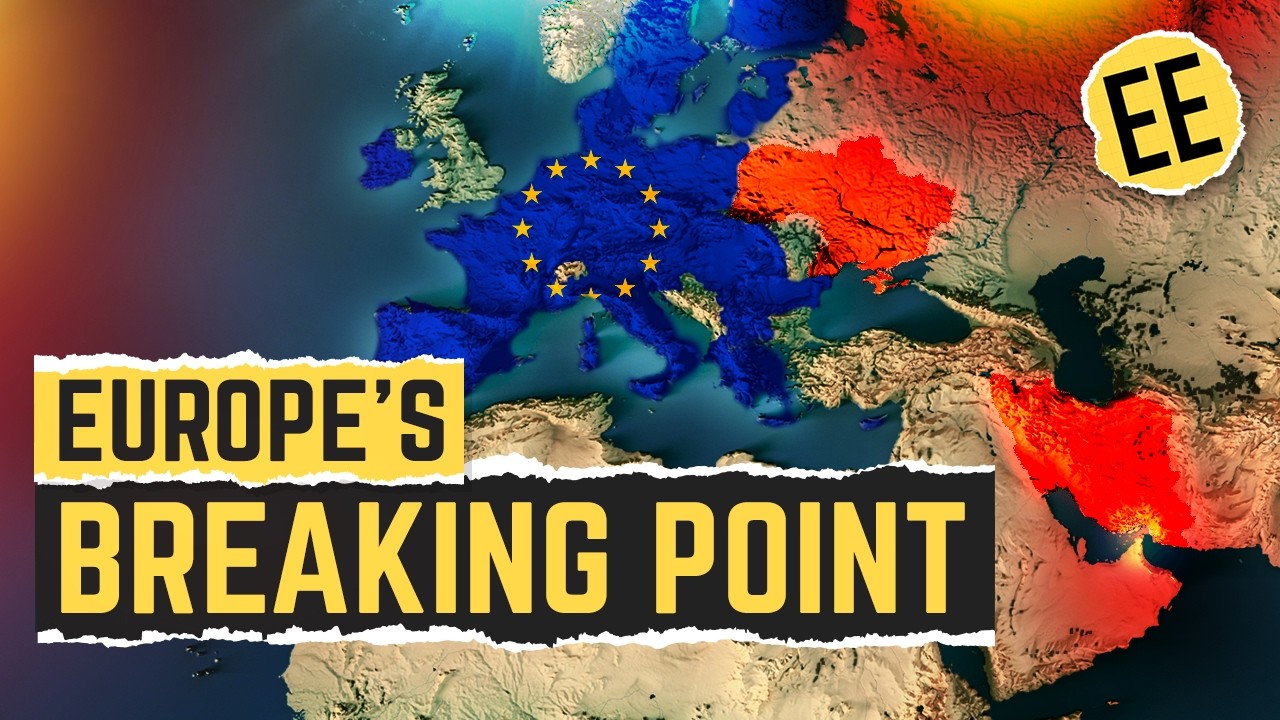
Europe is uniquely exposed to the Iran-Israel-US conflict because its industrial economy depends heavily on energy imports and Suez Canal shipping it cannot replace quickly.
Key Points
- 1.Europe imports 57% of its energy, making it far more vulnerable than the US. The US imports only 17% and is the world's largest oil producer; meanwhile Germany, Italy, and Spain rely heavily on fossil fuel imports, and Russia's supply was largely cut after Ukraine, leaving Norway and the US as key replacements — but infrastructure isn't built to handle the switch.
- 2.Oil's global pricing mechanism means Europe pays even without buying Gulf oil. With roughly 20 million barrels per day threatened at Hormuz, prices rise for all buyers worldwide regardless of source, hitting Europe's energy-intensive manufacturing sector — around 15–23% of GDP — harder than the US, where services dominate.
- 3.European manufacturing was already losing ground before this crisis. German automakers now compete with Chinese EV manufacturers producing comparable vehicles at a fraction of the cost, and added energy and shipping costs make European exports even less competitive, creating a cascade from oil prices to lower tax revenues to reduced public spending.
- 4.Suez Canal disruption and potential Bab-el-Mandeb closure threaten Europe's main Asia trade artery. Iran has threatened to close the strait connecting the Red Sea to the Gulf of Aden; Europe's three major shipping giants — MSC (Geneva), Maersk (Copenhagen), and CMA-CGM (Marseille) — face higher costs, rerouting delays, and long-term volume losses.
- 5.Europe was already economically fragile before the conflict hit. EU GDP growth is just 1.3% projected for 2025 versus the US at ~2.2%; Germany grew only 0.2% in 2025; and cumulative inflation from previous crises (peaking at 6–10%) has left households and governments with little buffer, while defense budgets are climbing toward €400 billion annually.
- 6.No short-term solutions exist, but medium-term options include energy infrastructure and trade diversification. Renewables already supply 47% of EU electricity, but oil and gas still power industry; Europe's internal energy market remains fragmented across 27 states; deeper partnerships with Norway and the US, better interconnection infrastructure, and avoiding protectionist reflexes are the most realistic paths forward.
Life's too short for long videos.
Summarize any YouTube video in seconds.
Quit Yapping — Try it Free →