K
Kings and Generals·History & GeopoliticsHow Old Is Indian Civilization?
TL;DR
Indian civilization is at least 2,000 years old as a unified cultural concept, but its roots stretch back over 4,500 years through layered migrations and transformations.
Key Points
- 1.The Indus Valley Civilization (2600–1900 BCE) is the earliest known urban culture of South Asia, likely speaking a Dravidian language, though its undeciphered script leaves this unconfirmed.
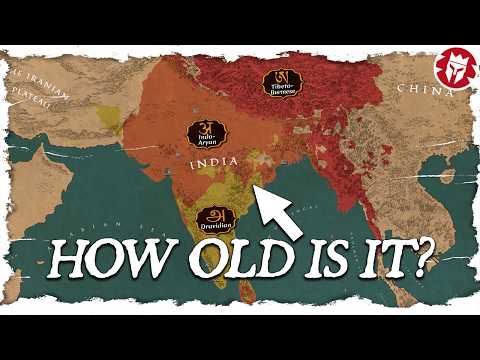
- 2.Three major language families — Indo-Aryan, Dravidian, and Tibeto-Burman — have coexisted in India since at least the Bronze Age, with Indo-Aryan migrants arriving from Central Asia around the 2nd Millennium BCE.
- 3.Modern Hinduism is not ancient: Shiva and Vishnu only rose to prominence in the first centuries CE, shaped by foreign influences like the Kushan wind god Wesho and the Greek hero Herakles.
- 4.Pan-Indian political unity was extremely rare — only the Maurya Empire (4th–2nd Century BCE), the Mughal Empire (16th–19th Century CE), and the British Raj ever unified most of the subcontinent.
- 5.Cultural unity ran deeper than political unity: Sanskrit served as a cosmopolitan lingua franca across South Asia during the 1st Millennium CE without displacing local languages, unlike Latin did in Rome.
- 6.The concept of India as a shared cultural space — "Bharatavamsa" — dates to the 2nd–3rd Century BCE, evidenced by cross-religious patronage, shared saints, and continent-wide literary networks.
- 7.India's modern national identities (Hindu nationalist, Muslim, communist, regional) are 20th-century constructs that emerged from British colonial rule and culminated in the violent 1947 Partition.
Life's too short for long videos.
Summarize any YouTube video in seconds.
Quit Yapping — Try it Free →