T
TLDR News·News & PoliticsIs the UK Slowly Breaking Apart?
TL;DR
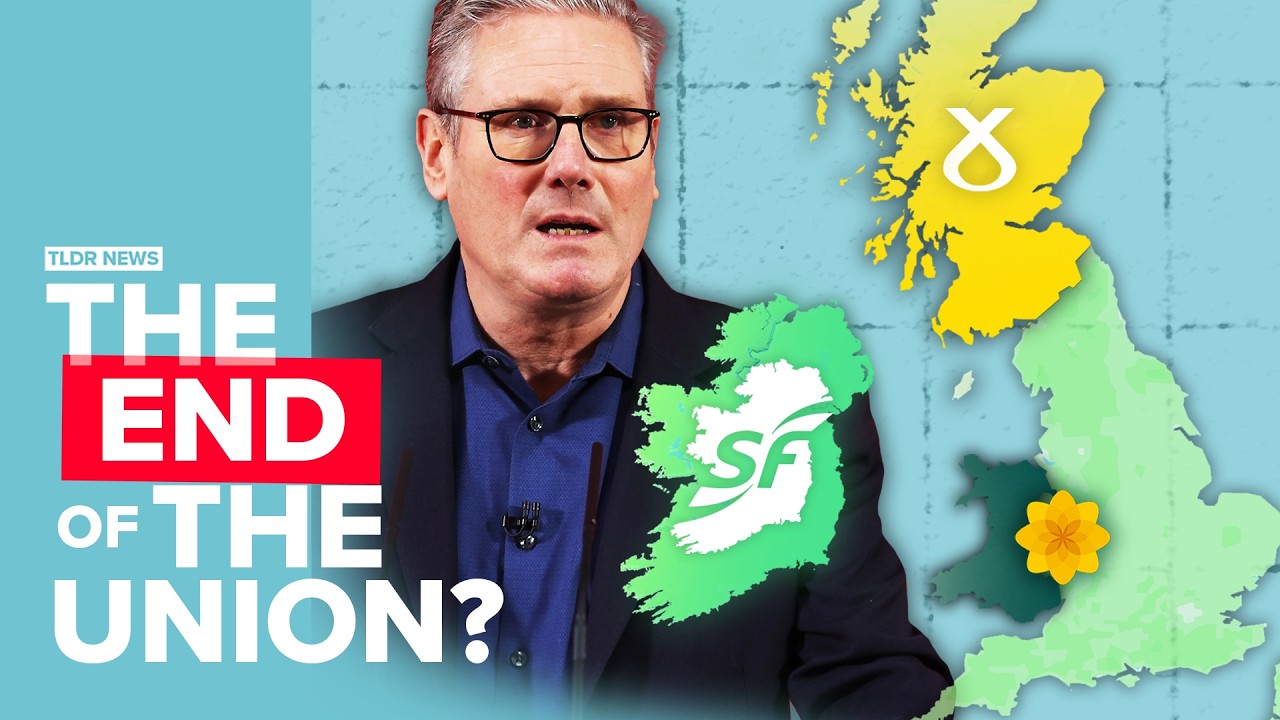
All three UK devolved nations now have pro-independence first ministers, adding momentum to separation movements despite major referendums remaining unlikely short-term.
Key Points
- 1.Scotland's SNP won a fifth consecutive term but fell short of a majority. John Swinny secured 58 seats (down from 64 in 2021), falling short of the 65 needed for a majority, weakening his demand for a second independence referendum before 2029.
- 2.Wales saw a historic Labour collapse, bringing pro-independence Plaid Cymru to power. Plaid surged to 43 of 96 seats while Reform UK jumped to second with 34; Labour fell to third and First Minister Eluned Morgan lost her seat entirely.
- 3.Northern Ireland's Sinn Féin already holds the first minister role but faces structural limits. Michelle O'Neal leads but lacks more power than the unionist deputy first minister under mandatory power-sharing; Sinn Féin's 2030 border poll target looks unlikely as united Ireland support rarely exceeds 40%.
- 4.Independence is not voters' top priority — bread-and-butter issues dominate. A March YouGov poll ranked independence sixth among Scottish concerns; in Wales it ranked last, meaning pro-independence parties won largely due to anti-Labour and anti-Westminster frustration, not independence enthusiasm.
- 5.Reform UK's rise and Zack Polanski's Greens could accelerate independence sentiment. A Reform-led UK government after 2029 would alarm progressive blocs in Scotland and Wales, while the Greens' polling surge gives England a major party leader openly backing Scottish and Welsh independence.
Life's too short for long videos.
Summarize any YouTube video in seconds.
Quit Yapping — Try it Free →