D
Daily Stoic·Self-ImprovementHow To Think Better in the Age of AI (From the Stoics)
TL;DR
AI makes Stoic critical thinking more essential than ever, because discernment, humility, and first-principles reasoning are what let you use AI without being misled by it.
Key Points
- 1.AI increases the value of thinking rather than replacing it. You must interpret AI outputs, craft intelligent queries, and spot hallucinations — skills rooted in ancient critical thinking, not technology.
- 2.First-principles thinking, taught by Aristotle and practiced by Lincoln, is the foundation. Lincoln read congressional debate minutes and library books for months before forming opinions on slavery — never settling for the gist.
- 3.Your information diet shapes the quality of your thinking. Just as elite baseball teams obsess over nutrition, you must cut low-quality inputs — 'garbage in, garbage out' applies to both AI training data and human minds.
- 4.Seneca's method: acquire one useful idea per day, compounded over a lifetime. Wisdom is built step by step through letters, rereading, and lingering on master thinkers — not downloaded in a single epiphany or course.
- 5.Ego and certainty are the primary obstacles to wisdom. Epictetus warned it is impossible to learn what you think you already know; AI's constant confidence and social media's viral certainty both model this dangerous flaw.
- 6.The Gell-Mann Amnesia effect means you should distrust all confident sources, not just in your domain. Recognizing experts are wrong about things you know well should make you skeptical about everything else they assert.
- 7.James Stockdale survived seven years in a Vietnamese prison camp partly because he studied Marxism at Stanford. Seneca's advice to read dangerous ideas 'like a spy in the enemy's camp' builds resilience and resistance to manipulation.
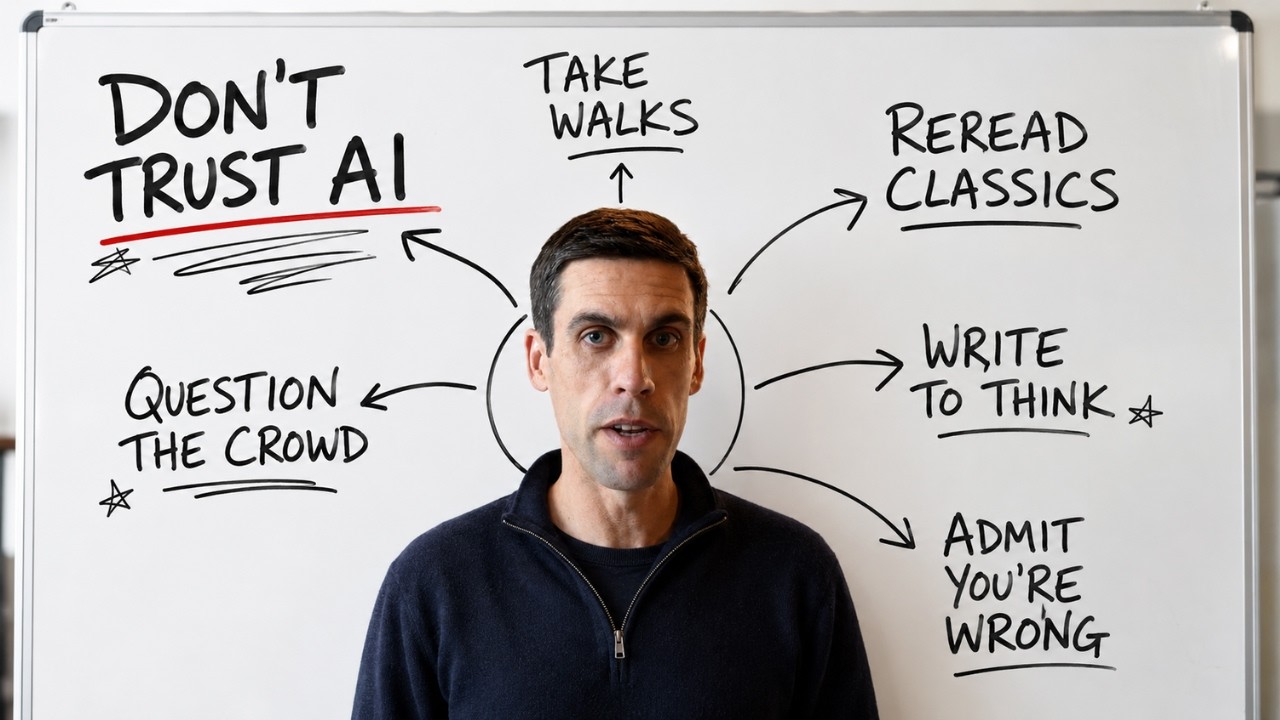
- 8.Writing, walking, and a commonplace book are the practical tools for better thinking. Ryan Holiday has kept a commonplace book for 20 years; Kierkegaard wrote then walked to process ideas; Montaigne's essays were attempts to catch himself thinking.
Life's too short for long videos.
Summarize any YouTube video in seconds.
Quit Yapping — Try it Free →