
B
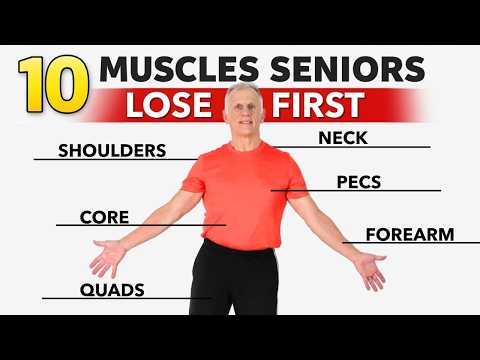
Bob & Brad·Health Fitness & Longevity10 Muscles Seniors Lose First — How to Reverse It
TL;DR
Seniors progressively lose 10 key muscle groups from neck to calves, and targeted exercises like chin tucks, bridges, and calf raises can reverse the decline.
Key Points
- 1.Neck stabilizers and upper traps weaken first, causing forward head posture. Chin tucks (5–10 reps, chin toward Adam's apple) and shoulder blade squeezes with resistance bands restore cervical alignment and upper back strength.
- 2.Rotator cuff external rotation is the most commonly lost shoulder function. Side-lying rotations with as little as 3 lbs or a single resistance band anchored to a door target the posterior rotator cuff; a towel at the elbow enforces proper mechanics.
- 3.Chest muscles and grip strength both carry serious health implications. Push-up progressions (wall → countertop → floor) rebuild pec strength; grip weakness is directly linked to all-cause mortality and can be addressed with a rice-filled sock or partial dead-hang.
- 4.Core weakness goes beyond abs — the spinal back muscles are equally critical. Bird-dog exercise, done standing against a wall or on all fours, trains the full spine from T-spine to lumbar and improves balance; 5–10 reps per side is the target.
- 5.Glutes are frequently 'forgotten' muscles in seniors, leading to flat butt syndrome. Glute squeezes (5–10 second holds) and hip bridges — performed before getting out of bed if needed — reactivate the glutes and protect the lower back.
- 6.Quads and lower-leg muscles (calves and tibialis anterior) round out the 10 areas. Sit-to-stand chair squats rebuild quad and glute strength; heel-to-toe raises (10–15 reps) strengthen both calves and the shin muscle to prevent tripping, with a chair placed behind for safety.
Life's too short for long videos.
Summarize any YouTube video in seconds.
Quit Yapping — Try it Free →