V
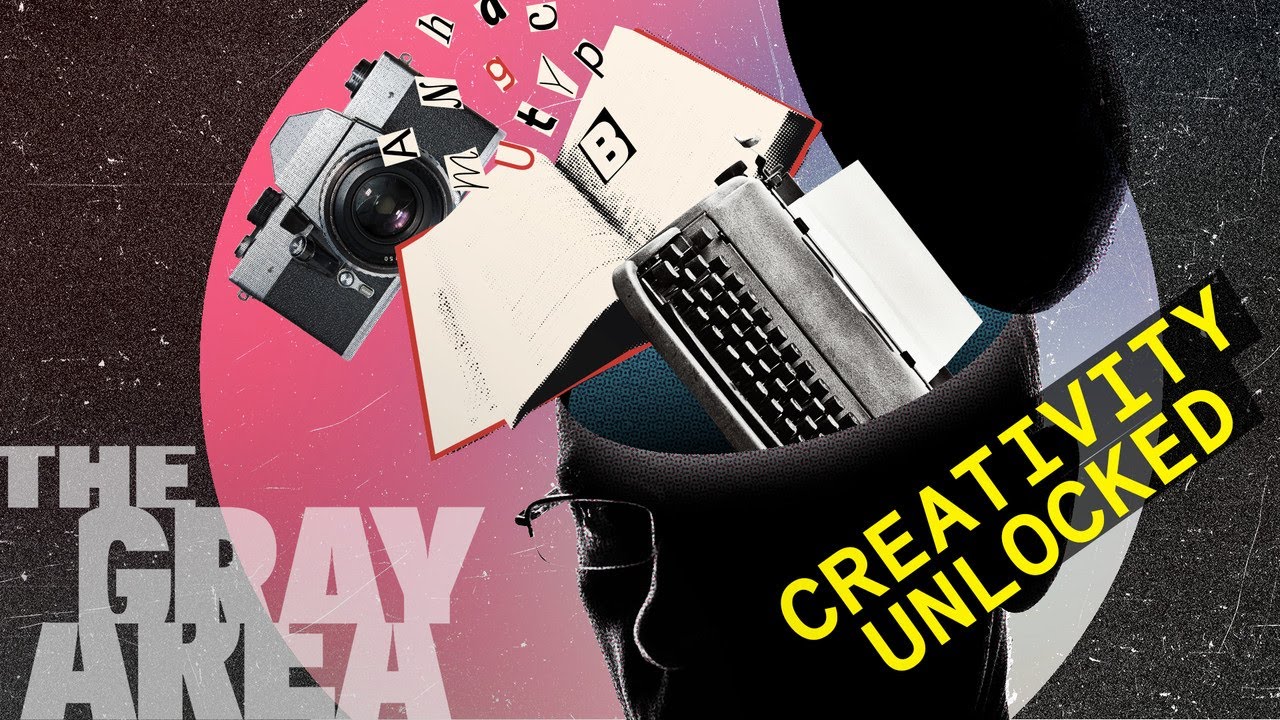
Vox·Self-ImprovementHow to be more creative | The Gray Area
TL;DR
Useful constraints — not total freedom — are the most reliable driver of creativity, as limits force the brain off its path of least resistance.
Key Points
- 1.Creativity research debunks the 'total freedom' myth. Psychologists' international survey of known creativity myths found the most popular false belief is that people are most creative when most free; neuroscience shows the brain defaults to familiar, convenient solutions when unconstrained.
- 2.The periodic table origin story reveals how constraints drive discovery. Mendeleev didn't dream up the periodic table — he was forced to organize 55 elements into a textbook volume two, and the publishing deadline constraint pushed him into recognizing the periodic pattern.
- 3.Dr. Seuss's greatest works came from imposed word limits. An editor bet him he couldn't write a book using only 50 words, producing Green Eggs and Ham; separately, a ~200-word vocabulary list forced him to rely on rollicking rhythm, and picking the first two rhyming words — cat and hat — created The Cat in the Hat.
- 4.Patricia Stokes identified 'paired constraints' as the engine of artistic innovation. Innovators first master the status quo, then apply a 'preclude' constraint (blocking the old approach) and a 'promote' constraint (mandating a replacement) — Monet banned black and mixed shades, forcing pure color mosaics to represent light.
- 5.Herbert Simon's 'satisficing' framework is a prescription for the choice-overload era. The polymath who co-created AI and won Nobel and Turing prizes argued humans must proactively set 'good enough' decision rules — same socks, one beret, three outfits, same breakfast — to conserve finite cognitive bandwidth for what matters.
- 6.Excessive autonomy and too many choices actively harm wellbeing. Epstein experienced decision fatigue and declining wellbeing after maximizing personal freedom as an independent writer; research shows maximizers are less happy, more prone to regret, and more likely to choose reversible options that prevent real commitment.
- 7.'Sliding' into relationships rather than deciding produces worse outcomes. Research shows couples who escalate commitment without ever consciously choosing — moving in together to keep options open — are more likely to divorce and less happy than those who make deliberate decisions.
- 8.Attention spans are collapsing under the weight of infinite choice and infinite scroll. Psychologist Gloria Mark's data shows task-switch intervals at work dropped from 3 minutes (late 1990s) to 75 seconds (2012) to 45 seconds (2022); infinite scrolling has paradoxically made people more bored, and AI 'work slop' now accelerates information fragmentation.
- 9.Epstein restructured his own life using the book's principles. He now writes a one-page structural outline before drafting (making his latest book 20% shorter and turned in early), batches email to one-to-three daily sessions, places his phone outside the room, uses cognitive outsourcing via a notepad, adopted Isabel Allende's candle-lighting ritual, and joined a nonprofit board and dance meetups to restore reciprocal obligation and in-person synchrony.
Continue yapping less
 21:24
21:24Vox
Americans oppose data centers. We went to find out why | America, Actually
 11:32
11:32Vox
What would J.R.R. Tolkien think of Palantir?
 44:16
44:16Vox
Why we can't see progress | The Gray Area
 22:05
22:05Vox
Progressives have a new playbook. We tested it in Queens | America, Actually
 12:21
12:21Chris Williamson
Is Andrew Huberman Threatened By Retardmaxxing?
 7:28
7:28Psych2Go
Weird Habits That Actually Reveal High Intelligence Part 2
 8:24
8:24Charisma on Command
Why Your Conversations Feel Boring (And How To Fix Them)
 12:53
12:53Daily Stoic
How to Change Your Life in 24 Hours
Life's too short for long videos.
Summarize any YouTube video in seconds.
Quit Yapping — Try it Free →