
M
Money & Macro·History & GeopoliticsIs the Dollar finally on the way out?
TL;DR
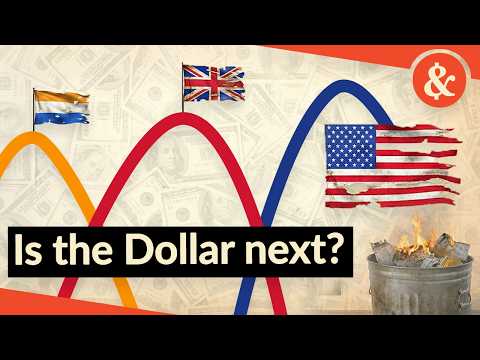
The dollar faces its first signs of lost reserve currency privilege under Trump, but history shows no clear alternative yet exists to replace it.
Key Points
- 1.The Dutch guilder's fall offers the earliest template for reserve currency collapse. The Bank of Amsterdam secretly lent silver reserves to the Dutch East India Company, eroding trust; when crises hit, the Dutch could no longer borrow cheaply — the first sign of lost privilege — and French occupation in 1795 ended it permanently.
- 2.Exorbitant privilege grants three compounding advantages: lower borrowing rates, larger borrowing capacity, and crisis-time cheap credit. Dutch provinces borrowed at 2–3% vs. Britain's 5–6% and France's 10–12%, letting tiny Netherlands hire mercenaries and survive the 1672 'Rampjaar' invasion by four powers simultaneously.
- 3.Britain inherited reserve currency status partly by absorbing Dutch bankers who helped found the Bank of England. After defeating Napoleon — financed by borrowing near 200% of GDP — Britain became the unquestioned hegemon, with ultra-cheap money fueling the first Industrial Revolution rather than collapse.
- 4.The US dollar overtook the pound as early as the 1920s, driven by two 1913 policy changes: creation of the Federal Reserve and removal of restrictions on foreign US bank branches. Britain clawed back position during the Great Depression but never recaptured dominance after WWII left the US holding ~80% of global gold.
- 5.Nixon's 1971 gold suspension, unlike Britain's Napoleonic-era suspension, was never reversed — creating the first true fiat reserve currency. Economist Michael Pettis argues this inverted the old logic: the US now spends dollars into the global economy while the world lends to America, making deficits a source of dollar strength, not weakness.
- 6.China already has the industrial scale to challenge the dollar, mirroring the US in 1913, but structural barriers remain massive. Export-oriented economies across Asia deliberately build around US consumer spending, making the dollar uniquely attractive — a self-reinforcing network no single policy change can quickly dismantle.
- 7.Two recent US actions have triggered the first observable loss of exorbitant privilege. Biden's freezing of foreign reserves (2022) undermined rule-of-law credibility, then Trump's Liberation Day tariffs caused capital to flee the US during a crisis — the exact reversal of the safe-haven inflow that historically defined reserve currency status.
- 8.Losing reserve status historically produces a century of relative stagnation, not immediate collapse. Both the Netherlands and Britain suffered decades of slower growth and periodic currency crises after their peaks; the US economy without dollar dominance is roughly equal in size to the EU and smaller than China by purchasing power.
Life's too short for long videos.
Summarize any YouTube video in seconds.
Quit Yapping — Try it Free →