
R
Rich Roll·Health Fitness & LongevityLeading Neuroscientist: At Least 45% of Dementia is Preventable With Simple Changes
TL;DR
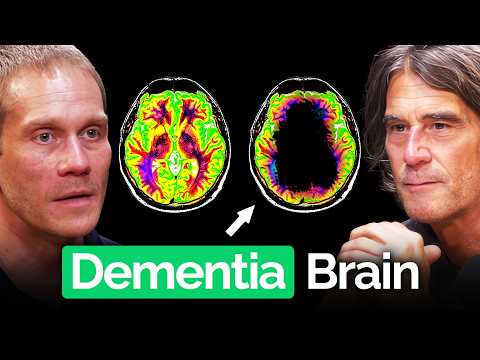
Neuroscientist Dr. Tommy Wood explains that 45% of dementia is preventable through exercise, cognitive stimulation, sleep, and metabolic health — all modifiable lifestyle factors.
Key Points
- 1.The Lancet Commission estimates 45% of dementias are preventable. A 2024 report by global experts, led by Professor Jill Livingston, found that when all modifiable risk factors are summed statistically, nearly half of dementias could be avoided — and some researchers believe the true figure may exceed 50%.
- 2.Age-specific dementia incidence has actually declined over recent decades. Improved cardiovascular disease treatment is credited, since 70–90% of dementias (Alzheimer's plus vascular) share cardiovascular risk factors; a 75-year-old today is less likely to be diagnosed than 20–30 years ago.
- 3.Dementia cases are still projected to double from ~7 million to 14 million in the US by 2060. This apparent contradiction is explained by population aging — people live longer — while per-age risk simultaneously falls; worldwide cases may reach 139 million by 2050.
- 4.Worsening metabolic health is the primary driver of rising dementia burden. Rising obesity and type 2 diabetes rates, and persistently high blood pressure, counteract gains from reduced smoking and better heart disease treatment.
- 5.GLP-1 receptor agonists may meaningfully reduce future dementia risk. Their large effects on blood pressure, blood sugar, and cardiovascular disease risk could shift the dementia trajectory if started early enough.
- 6.Dr. Wood's '3S Model' frames brain health as Stimulus, Supply, and Support. Stimulus (learning, skill development, social interaction) is the primary driver; Supply covers cardiovascular health, metabolic health, and key nutrients; Support centers on sleep and trophic factors like BDNF.
- 7.How we use our brains is the primary determinant of how they will function. Chronic multitasking and passive scrolling count as harmful under-stimulation; brains adapt to whatever input they receive, so shallow multitaskers become more distractable and less capable of deep focused work.
- 8.Retirement is a high-risk period for accelerated cognitive decline. The Seattle Longitudinal Study (data from the 1960s–70s) showed cardiovascular risk factors and loss of cognitive stimulation predict decline; those data were even used to raise the US retirement age in the 1980s.
- 9.AI risks becoming a cognitive prosthetic rather than a cognitive orthotic. Coined by AI expert Ken Ford, the distinction warns that offloading thinking to AI atrophies skills, whereas using AI after doing the work yourself — as shown in an MIT essay study — enhances learning.
- 10.Neuroplasticity persists into the 60s, 70s, and 80s — measurable on MRI. Randomized trials of language learning, music, and physical activity in older adults show structural brain changes; the adult brain is less malleable not because it can't change but because it has already been shaped by experience.
- 11.Errors and mistakes are the primary driver of neuroplasticity. Mismatches between expectation and reality trigger dopamine and noradrenaline responses that force the brain to form new connections; adults' aversion to failure and looking stupid therefore directly suppresses brain growth.
- 12.Different exercise types benefit distinct brain structures. Aerobic exercise (brisk walking to jogging) improves hippocampal volume and memory; resistance training (2x/week, 3 sets of 8–12 reps) improves white matter and executive function; both show MRI-measurable changes within 6 months.
- 13.High-intensity interval training produces outsized hippocampal benefits that persist for years. A study in 60–70-year-olds using the Norwegian 4×4 protocol (4 minutes at 85–95% max heart rate, 4 rounds, 3x/week) showed superior hippocampal improvements over steady jogging — and benefits remained 5 years later even after subjects returned to sedentary habits.
- 14.Coordinative 'open skill' exercise — dancing, martial arts, racket sports — best supports overall cognitive function. Unlike closed-skill activities (running, cycling), these demand rapid information processing, strategic thinking, and social interaction, and dancing consistently outperforms most other activities in studies of mental health and cognition.
- 15.Key nutrients critical for dementia prevention include B vitamins, omega-3s, vitamin D, iron, magnesium, zinc, antioxidant vitamins, and polyphenols. Sleep is equally critical as the period when synapses formed during learning are cemented and refined; together, nutrition and sleep constitute the 'Support' pillar of the 3S model.
Life's too short for long videos.
Summarize any YouTube video in seconds.
Quit Yapping — Try it Free →