P
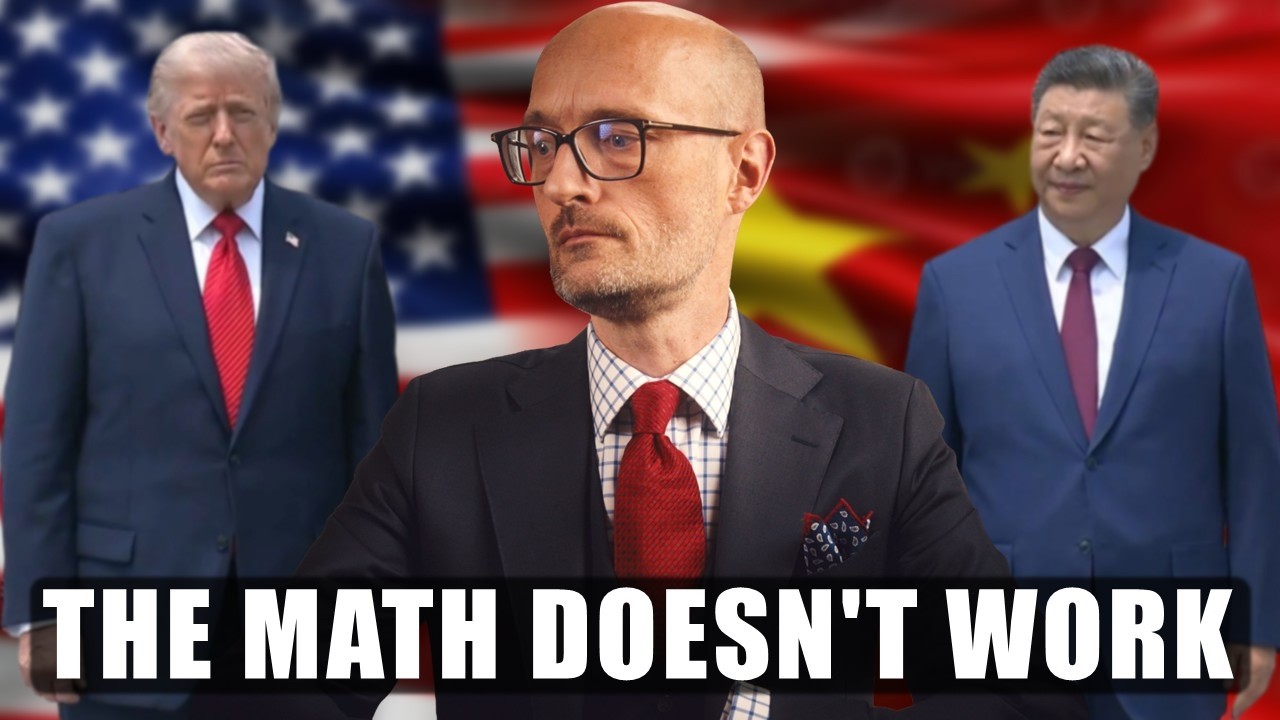
Patrick Boyle·History & GeopoliticsWhy the Trump Xi Summit Was Always Going to Fail!
TL;DR
The Trump-Xi summit cannot solve the trade imbalance because it's an accounting problem driven by domestic savings policy, not a political one.
Key Points
- 1.The trade war escalated to historic tariff levels before a fragile truce. The US imposed 145% tariffs on Chinese goods; China retaliated with 125% plus rare earth export restrictions, before both sides agreed to a 90-day truce expiring in November.
- 2.The summit's ambitions are embarrassingly low, dubbed the 'Beans and Boeing Summit.' Both leaders arrive under domestic stress — China faces a collapsing property sector, youth unemployment, and demographic decline; Trump faces 34% approval ratings and midterm elections in November.
- 3.Trade imbalances are an accounting problem, not a political one, per Michael Pettis. China's financial repression — suppressing household income via low savings rates, undervalued currency, and weak labor protections — forces up national savings and exports the surplus abroad automatically.
- 4.China systematically produces more than it consumes and imports almost nothing. FT journalist Robin Harding found Chinese economists believe they can make everything better and cheaper domestically; import volumes are 'comparatively anemic' compared to the export-driven first China shock of the 2000s.
- 5.The US is structurally forced to run trade deficits by surplus countries' capital flows. When China and Germany's excess savings flood US financial markets, a corresponding trade deficit is a balance-of-payments identity — not a choice — making the US the global consumer of last resort.
- 6.Trump's primary negotiating tool, tariffs, has been struck down twice by US courts. The Supreme Court invalidated his IIPA tariffs; a federal trade court then ruled his Section 122 tariffs illegal; a third set under Section 301 won't be ready until summer, leaving him largely disarmed.
- 7.The summit's deliverables — a 'Board of Trade' — recycle a failed approach. China missed purchase commitments from the 2020 Phase 1 deal; the proposed monitoring committee is essentially a solution to China not honoring commitments by creating a new committee to watch for the same thing.
- 8.The structural fix — shifting China to consumption-led growth — is politically toxic and historically ignored. Keynes proposed a system at Bretton Woods penalizing persistent surpluses and deficits; the US rejected it then, and neither side today shows willingness to make the domestic policy changes required.
Life's too short for long videos.
Summarize any YouTube video in seconds.
Quit Yapping — Try it Free →