T
The Wall Street Journal·Science & EducationExperts Explain Hidden Crowd Control for a 2M-Person Concert | WSJ Pro Perfected
TL;DR
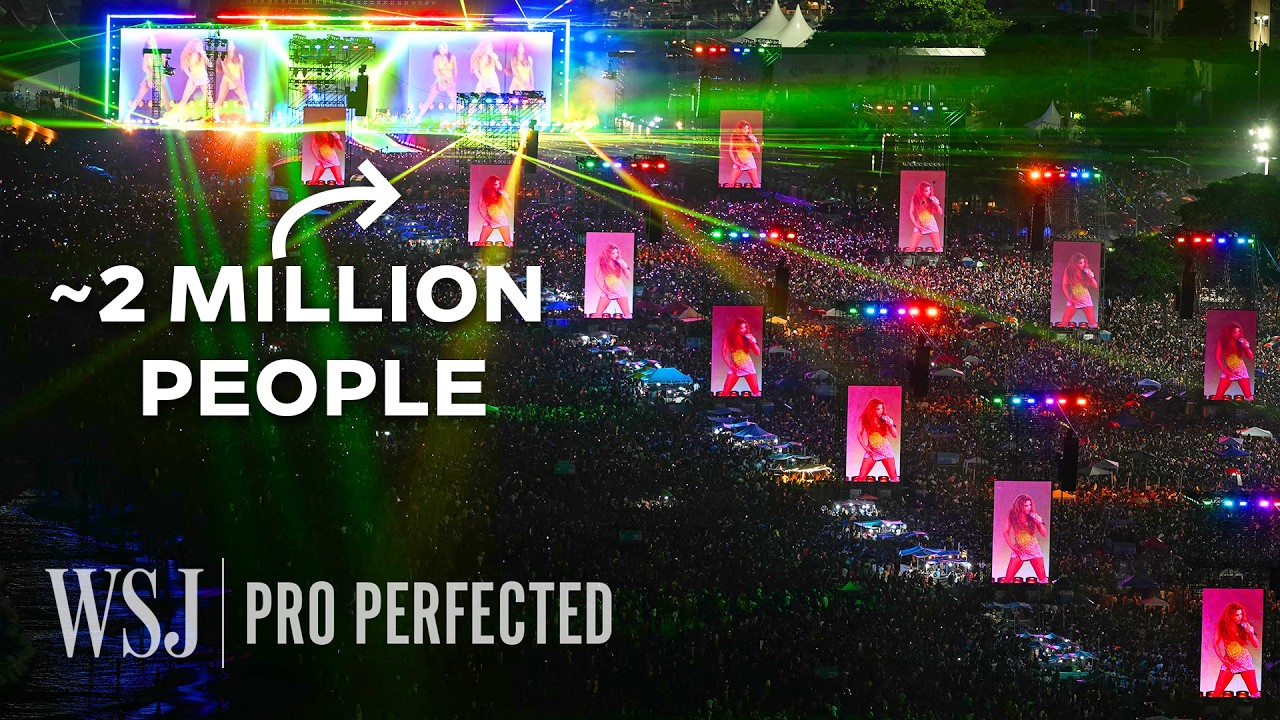
Security experts break down the unique crowd management challenges of Copacabana Beach concerts, covering barriers, sand surfaces, and free-entry unpredictability.
Key Points
- 1.Sand is the primary physical hazard at Copacabana. Without solid footing, feet sink and shift, causing trip risks especially during exits or emergencies — ideal mitigation is full floor covering, but there isn't enough in most countries for a 2-million-person event.
- 2.Barrier systems are layered to protect both crowd and staff. Secondary barriers create safe working corridors for security and medical teams; 'tea barriers' reduce dangerous lateral crowd movement and compression toward the stage.
- 3.Astroworld's fatal flaw was the absence of a central spine barrier. Unlike Copa Cabana's segmented screen sections that spread crowds over 2 miles of coastline, Astroworld allowed unrestricted migration, and a carnival entrance overwhelmed one side.
- 4.Free-entry events make capacity planning nearly impossible. Planners model multiple scenarios — 20,000, 30,000, 40,000+ attendees, with varying directional flows — stress-testing worst-case conditions so all lesser scenarios are covered by default.
Life's too short for long videos.
Summarize any YouTube video in seconds.
Quit Yapping — Try it Free →