H
Hagerty·Car Reviews & AutomotiveFirst Cameras Allowed in Toyota's GR Factory: Minimal robots & More Humans | Capturing Car Culture
TL;DR
Toyota's GR Moramachi factory uses unusually high human labor, 35m of structural adhesive, and obsessive precision to hand-build 100 GR cars daily.
Key Points
- 1.The GR factory is uniquely human-intensive compared to standard auto plants. Each car takes ~10 minutes per station versus ~1 minute at Toyota's Tahara and Texas plants, with ~250 of 3,300 total spot welds done entirely by hand.
- 2.Minimal robots and modular design define the GR factory's layout. The plant uses AGVs instead of multi-story conveyors, has interchangeable robot welding heads, and is intentionally modular so new technologies can be added without rebuilding the line.
- 3.The GR Yaris receives 35 meters of structural adhesive — 15 meters more than the standard Yaris. WRC Rally 2 homologation bodies are also built on the same production line, confirming the GR cars' motorsport-grade construction.
- 4.The '1G process' is an exclusive GR-only assembly step. Structural components like the cowl and core support are bolted on while the car sits on its own weight (gravity), ensuring suspension geometry is locked in under real-world load rather than while suspended.
- 5.Suspension components are individually measured and matched to each specific car. This mirrors piston-weight matching in high-performance engines and means every GRS leaves the factory with bespoke suspension tuning invisible to normal drivers.
- 6.Each completed GR car is dynamically tested at 120 km/h over a 3 km course before leaving the factory. Inspectors certified through monthly exams assess 14 items including handling and steering; alignment is also simulated with two 75 kg occupants to replicate real driving conditions.
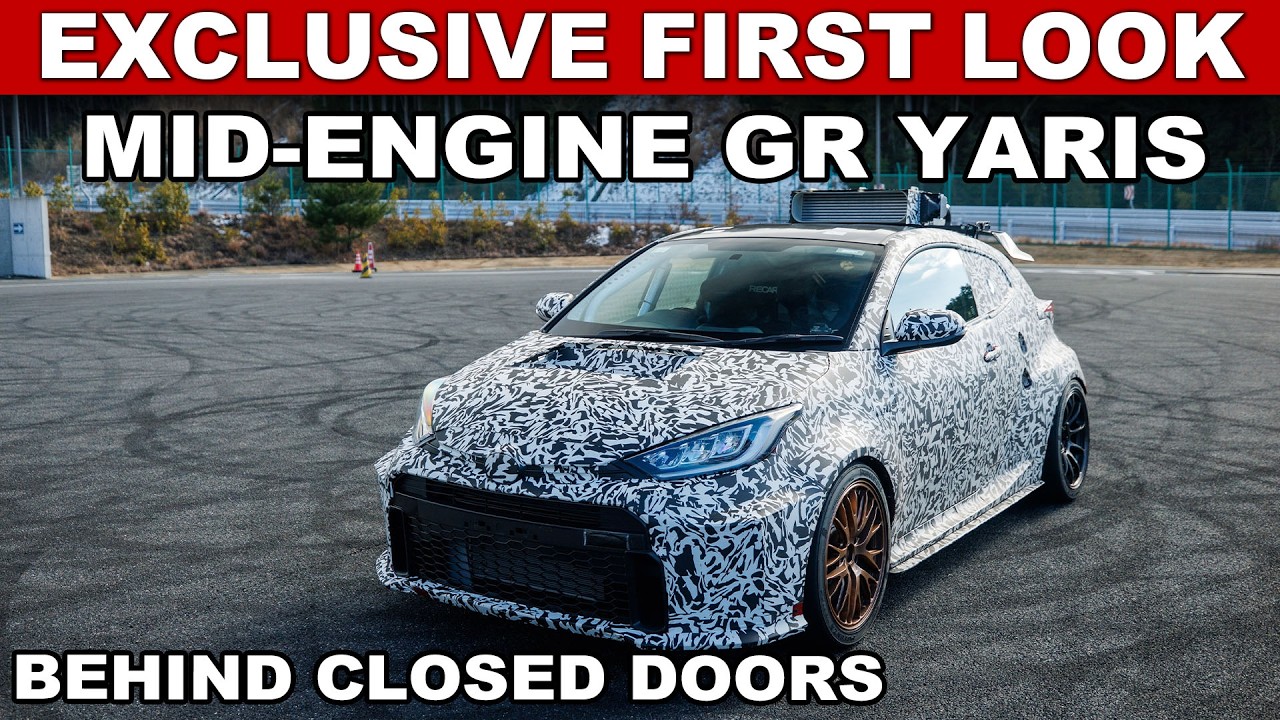
- 7.Shimoyama GR/Lexus headquarters features a secret mid-engine GR Yaris prototype with a 1.6L turbo moved to the rear. Chief engineer Naohiko Saito explained the switch from front-wheel-drive caused understeer in endurance racing, so the engine was relocated midship with AWD to solve tire wear and oversteer issues.
- 8.Akio Toyota (Morizo) remains personally hands-on with every GR vehicle and was the first to roll a GR Yaris during rally evaluation. Rather than being upset, he used the rollover to identify a BSC issue and confirmed the car's rollover safety, embodying the brand's continuous improvement philosophy.
- 9.Toyota had to effectively relearn sports car engineering when launching the GR brand. A 14-year gap between the MR2 (1999) and GT86 (2013) meant most engineers who built the Supra and MR2 had retired; Toyota now recruits passionate engineers from internal car clubs, including an active D1 Grand Prix professional drifter.
Life's too short for long videos.
Summarize any YouTube video in seconds.
Quit Yapping — Try it Free →