
L
Level1Techs·TechSystem 76's Thelio Mira w/ Pop! OS and Cosmic 🚀
TL;DR
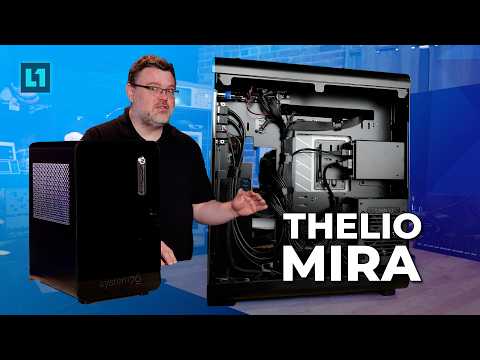
The Thelio Mira is System 76's premium AM5 desktop with custom thermal/IO engineering, running Pop OS and the Cosmic tiling desktop environment.
Key Points
- 1.The Thelio Mira is a semi-custom AM5 desktop, not a pure OEM box. It uses an ASRock X870 Pro RS Wi-Fi motherboard with Ryzen 9000 series CPUs (up to 9950X 3D), DDR5 up to 192GB, PCIe 5.0 x16 GPU slot, and an RTX 5070 Ti in the review unit.
- 2.The real hardware differentiator is System 76's custom IO daughterboard. It handles fan control and power sequencing independently of motherboard headers, acts like a mini BMC for desktop thermals, runs open-source firmware, and enables deep OS-level thermal integration with Pop OS.
- 3.Magnetic panels with pogo-pin fan connectors make the chassis unusually serviceable. Removing side panels doesn't disturb wiring, fans stay attached to panels during removal, and all unused PSU cables are neatly strapped in the bottom — the reviewer expects other case makers to adopt pogo pins.
- 4.Airflow is structured for sustained compute loads, not just gaming transients. Side and bottom panels intake air directly onto the motherboard and DDR5 (often neglected in other cases), exhausting through a top-mounted ID Cooling AIO, enabling higher sustained boost clocks and better longevity.
- 5.Pop OS is described as a cleaner, better-taste reimagining of Ubuntu. It runs on any hardware, is open source, and ships with the Cosmic desktop — System 76's own environment built from scratch that is distinct from GNOME, KDE, or other existing desktops.
- 6.Cosmic's tiling window manager is the software highlight, praised as the best on-ramp to tiling for new and experienced Linux users alike. Super+G toggles individual windows between floating and tiling mode, workspaces can mix tiling and non-tiling, and the system auto-resizes windows — reducing cognitive load significantly.
- 7.The system launches around April 10th and the premium is justified by warranty, firmware management, and integration. The firmware update manager handles BIOS and peripheral updates (including the custom ASRock board) through the OS; the main long-term concern flagged is AIO longevity, and AM5 CPU failure rates — higher on ASRock/ASUS boards — are noted but considered largely addressed via BIOS updates.
Life's too short for long videos.
Summarize any YouTube video in seconds.
Quit Yapping — Try it Free →