L
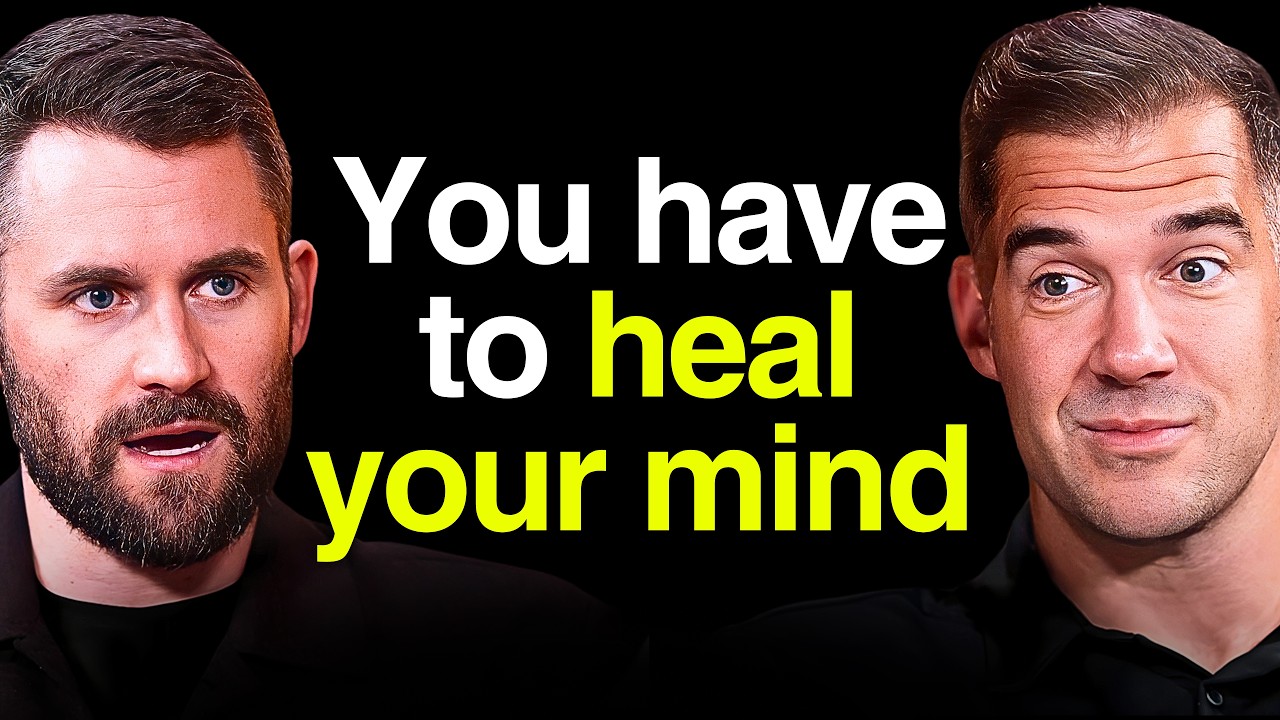
Lewis Howes·Health, Fitness & LongevityThe Real Reason Achieving More Won't Solve Your Problems | NBA Champion Kevin Love
TL;DR
Achieving more won't heal you because you return to the same baseline brain after every dopamine hit, leaving underlying anxiety and depression untouched.
Key Points
- 1.Achieving more doesn't cure depression — it deepens it. Kevin Love kept moving the goalposts (10 years, then 12, 15, 18 seasons) believing each new milestone would eliminate anxiety, but each achievement only returned him to the same brain without doing the inner work.
- 2.Success is not immune to depression. Love references Anthony Bourdain dying the morning of Game 4 of the 2018 NBA Finals and Kate Spade, both seemingly 'having everything,' as proof that external achievement provides no psychological protection.
- 3.Love rates his daily nervous system pain at a 5 or 6 out of 10. He describes a constant pit of anxiety in his chest, managed with SSRIs, which replaced earlier rage fits and agoraphobia that forced him to physically remove himself from situations.
- 4.Athletic identity loss feels like a death. Finishing his 18th NBA season, Love describes facing 'athletic mortality' — having played organized basketball since age 5 or 6, the looming end of his career triggers anticipatory grief comparable to losing his father.
- 5.Love spent roughly nine years estranged from both parents. The break began around the 2016 playoffs and finals; reconciliation came during the final 16–18 months of his father's life after his father got cancer, had a leg amputated, and eventually entered hospice before passing in April of last year.
- 6.His father was both his greatest teacher and a source of trauma. Stan Love played briefly for the Lakers and toured with the Beach Boys, and channeled his own unfulfilled ambitions into pressure on Kevin — creating the rage and drive that fueled Kevin's career but damaged their relationship.
- 7.Rage and anxiety were a 'gift and a curse' athletically. Love questions whether his healing process, including therapy and SSRIs, may have dulled his competitive edge, citing Michael Jordan and Tom Brady as examples of elite performers who manufactured enemies and psychological pressure to sustain peak performance.
- 8.The Weight of Gold documentary illustrates post-achievement depression at scale. Olympic gold medalists frequently experience extreme depression within months of winning, with many committing suicide within the first two years — showing the wound beneath elite achievement is not healed by winning.
- 9.Steph Curry is cited as the rare elite athlete who has inner peace. Love identifies Curry as someone who combines world-class performance with emotional health, strong family life, faith, and work-life balance — calling it 'extremely rare' at that competitive level.
- 10.Epigenetics means generational trauma can live at a cellular level. Love connects his family's dysfunction — including Beach Boys members Brian Wilson and Mike Love (his uncle) — to patterns of emotional unavailability and volatility passed down through generations.
- 11.Fatherhood and losing his father accelerated his emotional growth. With daughters aged two-and-a-half and one year old, Love says having daughters has made him emotionally softer, and losing his father has clarified what kind of father he wants to be — using both his father's successes and failures as a blueprint.
Life's too short for long videos.
Summarize any YouTube video in seconds.
Quit Yapping — Try it Free →