E
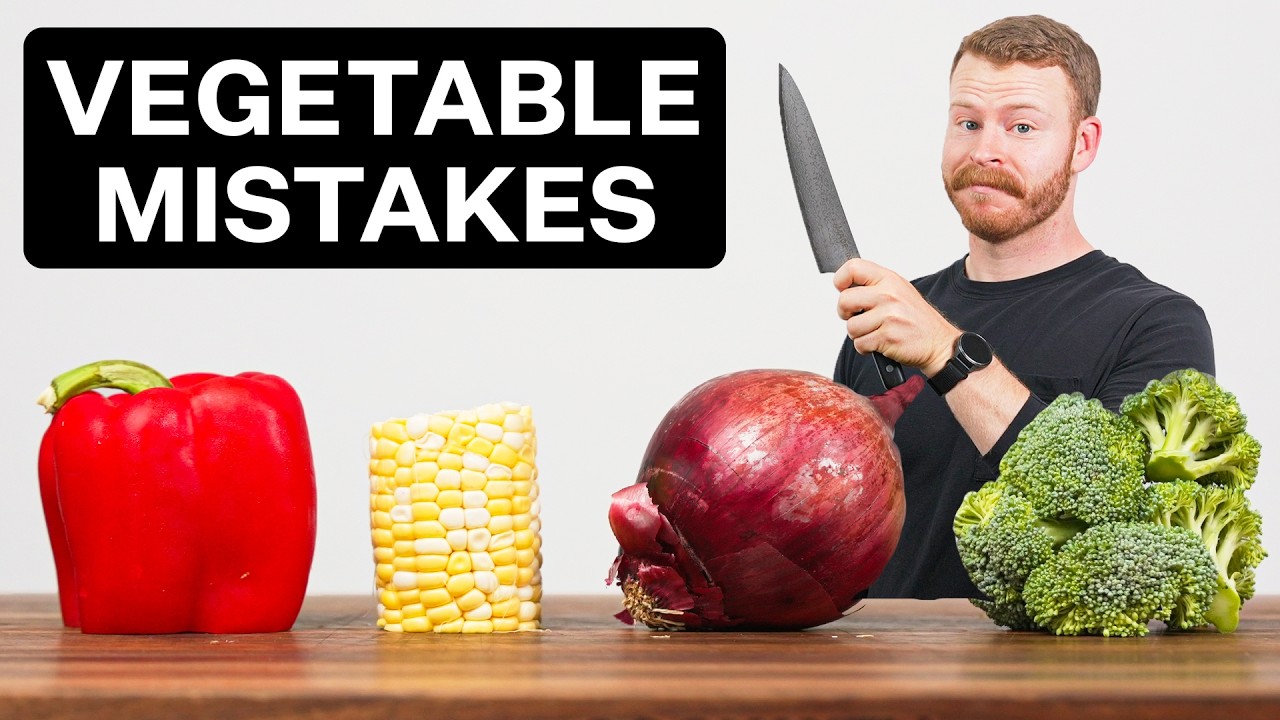
Ethan Chlebowski·Food & Cooking5 Mistakes Most People make when using Vegetables.
TL;DR
Most people misuse vegetables because they don't understand how cutting and cooking methods chemically alter flavor, texture, and aroma.
Key Points
- 1.Mistake 1: Bad setup makes chopping miserable, not lack of skill. A good setup requires three S's — sturdiness (non-slip board), space (24-inch/60cm board recommended), and sharpness (a whetstone-maintained knife). A $40 board and $20 knife are sufficient.
- 2.Mistake 2: Not understanding the six flavor properties of vegetables. Flavor breaks down into taste (5 categories), aroma (volatile compounds), texture, physical sensations, sight, and the human/emotional element — each shaped by the vegetable's molecular makeup.
- 3.Sweetness in vegetables increases during cooking through four mechanisms. Evaporation concentrates sugars, cell wall breakdown releases trapped sugars, heat activates enzymes converting starch to maltose (as in sweet potatoes), and cooking reduces masking bitter compounds.
- 4.Aroma, not taste, is what most distinguishes vegetables from one another. Harold McGee notes most flavor is actually odor; vegetables fall into six aroma categories: sulfurous/allium, green/grassy, earthy, sweet/nutty, fruity/floral, and herbaceous.
- 5.Mistake 3: Ignoring how cut size controls flavor distribution. An experiment with three onion cuts (whole, diced, grated) in tomato sauce showed grated onion produced the sweetest, most onion-forward sauce, while whole onion kept sugars and aroma concentrated in the piece itself.
- 6.Cutting decisions should target a specific flavor outcome, not follow rules. Match ingredient sizes for cohesive bites, use thick cuts for bold texture contrast (e.g., thick tomato slice in a sandwich), and adjust aromatic cuts based on whether you want concentrated or dispersed flavor.
- 7.Mistake 4: Not understanding that cooking methods trigger different chemical reactions. Boiling caps temperature at 212°F preventing browning; roasting browns only the outside; sautéing speed controls evaporation rate. A 9-cube potato matrix across three cuts and three methods (boil, sauté, fry) demonstrated vastly different flavor outcomes.
- 8.Mistake 5: Fear of experimentation limits cooking growth. With 40 common vegetables, 8 cuts, and 15 techniques, there are 4,800 possible outcomes before adding sauces or spices — treating cooking as exploration rather than rule-following is the key mindset shift.
Life's too short for long videos.
Summarize any YouTube video in seconds.
Quit Yapping — Try it Free →