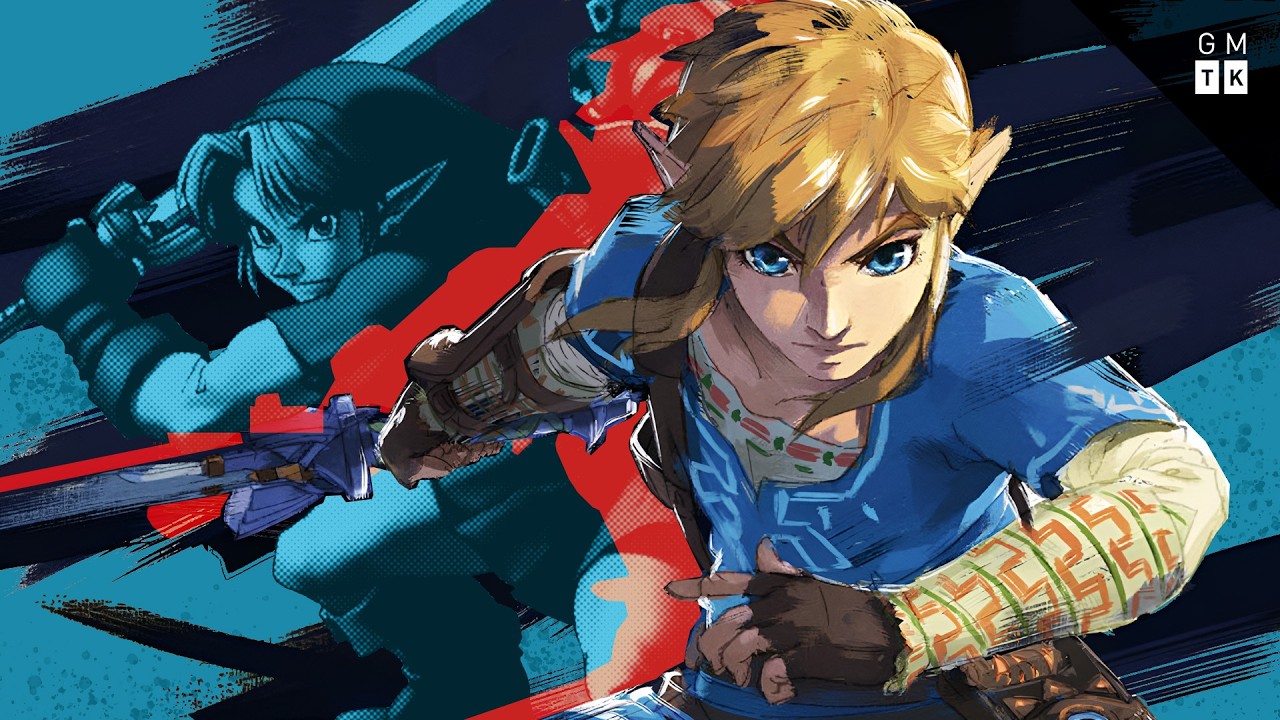
Has Zelda Changed Forever?
TL;DR
Breath of the Wild permanently shifted Zelda from passive, linear design to active, player-driven freedom — but this came at the cost of dungeons, progression, and handcrafted storytelling.
Key Points
- 1.Skyward Sword's failure forced a total rethink of the Zelda formula. By 2013, Zelda's linear structure — dungeon, item, boss, repeat — had barely changed since Ocarina of Time (1998), and producer Eiji Aonuma publicly committed to reinventing every convention of the franchise.
- 2.Breath of the Wild introduced five structural changes that redefined the series. Non-linear progression, a fully open contiguous world, minimal handholding, systems-driven physics-based problem-solving, and an expanded moveset (dedicated jump, wall climbing, shield surfing) replaced the old formula entirely.
- 3.The shift reframed Zelda from a 'passive' to an 'active' game design philosophy. Director Hidemaro Fujibayashi distinguishes passive games (predetermined order, single intended solutions) from active games where players drive decisions — placing Breath of the Wild closer to Minecraft and Factorio than Call of Duty.
- 4.Aonuma was so transformed by Breath of the Wild that he called older puzzle designs 'a sin' and 'outdated.' He now believes freedom must be maintained in all future Zelda titles, even questioning why anyone would want a more restricted game, after replaying Wind Waker and finding it felt dated.
- 5.Tears of the Kingdom and Echoes of Wisdom doubled down on active design, sometimes to a fault. Tears added physics-based vehicle building and the 'Ascend' ability (originally a debug tool), while Echoes of Wisdom's co-director Tomomi Sano explicitly prioritized player freedom over restrictive mechanics.
- 6.The active philosophy discarded beloved Zelda staples — dungeons, item progression, and narrative structure. Breath of the Wild front-loads all mechanics in the tutorial, leaving almost no sense of progression; dungeons can be cheesed or skipped; and the story's jumbled memories lack emotional escalation or dramatic pacing.
- 7.Donkey Kong Bananza and Resident Evil: Requiem suggest Zelda could balance both design philosophies. Bananza doles out transformations across the adventure like classic Zelda items while maintaining open destruction-based freedom; Requiem alternates between two tonal styles — pointing toward a possible future Zelda that blends open overworlds with handcrafted classic dungeons.
Continue yapping less
 1:44
1:44Game Maker's Toolkit
The GMTK Game Jam returns for 2026
 1:25
1:25Game Maker's Toolkit
Mind Over Magnet is in Humble Bundle's puzzle pack
 9:43
9:43Game Maker's Toolkit
The Secrets Behind THAT Cyberpunk 2077 Montage
 25:59
25:59Game Maker's Toolkit
How Rockstar fit an entire city into PlayStation 2 memory
 14:55
14:55YongYea
Destiny 2 Is Dead, Bungie Announce End Of Live Service After Massive Decline
 10:30
10:30YongYea
Kingdom Come Deliverance Devs Announce Middle-Earth/Lord of the Rings Open World RPG...!
 13:25
13:25YongYea
PlayStation Increase Price Of Online Multiplayer Paywall & People Are Pissed...
 21:27
21:27YongYea
ESA Fail Miserably To Halt Stop Killing Games, California Bill Moves Forward
Life's too short for long videos.
Summarize any YouTube video in seconds.
Quit Yapping — Try it Free →