S
Simple History·History & GeopoliticsImprovised Tank Armor Tricks
TL;DR
Tank crews throughout history improvised armor using nails, wood, concrete, and scrap to counter evolving threats when official upgrades couldn't keep pace.
Key Points
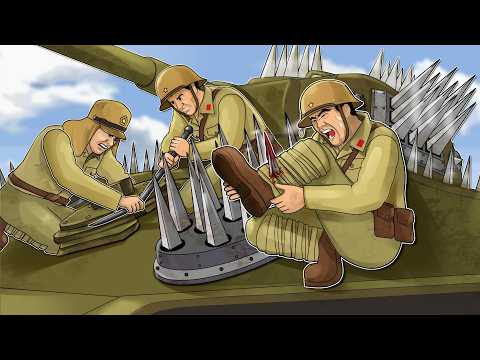
- 1.- In the Pacific theater, American Sherman crews welded 3.5-inch construction spikes around hatches and hatches to impale Japanese infantry attempting to climb aboard with satchel charges.
- 2.- To defeat Japanese Type 99 magnetic anti-tank mines, Marines first roughened paint with sand, then bolted wooden planks along hulls — disrupting both magnetic grip and shaped-charge geometry.
- 3.- Soviet experiments with concrete armor on T-34s failed catastrophically: some configurations added over 13 tons, with individual blocks heavier than a small car, destroying mobility and field-repair capability.
- 4.- German Schürzen wire mesh skirts ('bed frame armor') were lightweight and replaceable, designed to tumble Soviet anti-tank rifle rounds before impact — later adapted by both sides against shaped charges.
- 5.- Soldiers welding spare tank plates onto active vehicles inspired the official M4A3E2 'Jumbo' assault Sherman, demonstrating how battlefield improvisation directly shaped factory-produced designs.
Life's too short for long videos.
Summarize any YouTube video in seconds.
Quit Yapping — Try it Free →