
S
SciShow·Science & EducationChimps Love "People Watching" Too
TL;DR
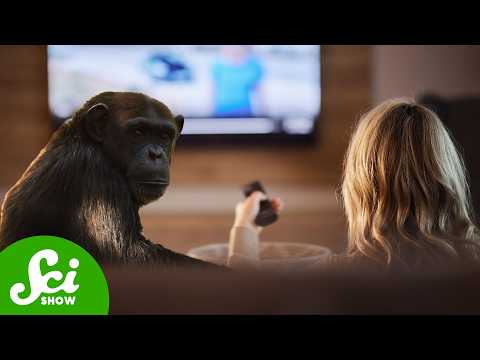
Chimps and human children both exhibit social curiosity, suggesting people-watching is an ancient evolved behavior predating humans by millions of years.
Key Points
- 1.Social curiosity is a defined phenomenon with real survival value. Watching others helps animals learn group rules, identify allies or threats, and copy useful behaviors — making it far more than idle nosiness.
- 2.A 2022 macaque preprint study showed primates seek social information as eagerly as food reward information. Monkeys tapped a button to see emotional faces of fellow monkeys almost every time, and stared longer at faces when given no preview.
- 3.A 2025 study used 'curiosity boxes' with tablets to test chimps and children aged 4–6. Both groups preferred watching group social interaction videos over solo-actor videos, confirming shared social curiosity across species.
- 4.Both chimps and kids chose social videos over tangible rewards. In a key experiment, subjects gave up a jackfruit seed or shiny marble to keep watching interactions — demonstrating they pay a real cost for social information.
- 5.Younger children and male chimps showed the strongest draw to social videos, while content preferences split by sex. Older boys favored negative interactions (fighting, conflict) and girls favored positive ones (playing, grooming), which researchers linked to socialization patterns.
Life's too short for long videos.
Summarize any YouTube video in seconds.
Quit Yapping — Try it Free →