
W
Wendover Productions·History & GeopoliticsHow the Iran War Spiked Oil Prices
TL;DR
Iran's Strait of Hormuz closure cut only 8% of global oil supply but spiked prices 60% due to oil's extreme demand inelasticity and trader sentiment shifts.
Key Points
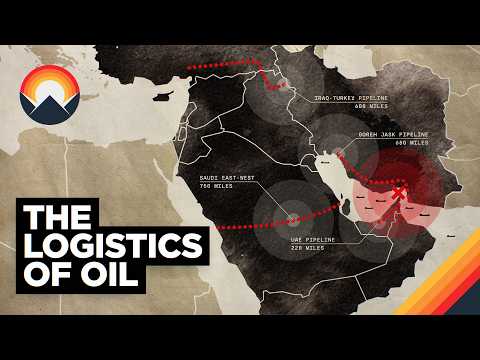
- 1.The Strait of Hormuz closure reduced global oil supply by only 8%, yet prices surged 60%. Iran's IRGC blockaded the strait with missiles and drones, but bypass pipelines — UAE's Fujairah route, Saudi Arabia's East-West pipeline (up to 5–7M barrels/day), Iraq-Turkey pipeline, and Iran's own Jusk port — collectively cushioned the blow.
- 2.Gulf producers vary wildly in their vulnerability to a strait closure. Qatar, Kuwait, and Bahrain are 100% reliant on the strait for exports and were devastated, while the UAE, Saudi Arabia, Iraq, and even Iran itself had alternative export routes already built or quickly activated.
- 3.Oil's near-zero short-term demand elasticity of -0.1 explains why a small supply cut causes a massive price spike. Unlike cereal (elasticity of -3), oil has no immediate substitute — 75% of US personal driving is non-discretionary, and commercial transport absorbs costs rather than stopping.
- 4.Commodity traders initially underreacted, keeping prices muted for the first days of the conflict. Trump's statement framing the strikes as a limited operation, combined with precedent from Venezuela, Syria, and the June 2025 Iran nuclear strikes, led traders to bet on a short-term conflict.
- 5.Marine war risk insurance cancellations — not just physical blockades — functionally froze Gulf oil exports. All major insurers simultaneously cancelled policies with 72-hour notice; when new policies reappeared, premiums had risen more than tenfold to roughly 3% of ship value per journey versus 0.1–0.25% pre-war.
- 6.The war permanently shattered the market's assumption of Gulf geopolitical stability, likely keeping oil prices elevated long-term. Even as diversion routes ramped up in late March and supply partially recovered, prices held near $100/barrel as traders priced in ongoing uncertainty about the strait's future reliability.
Life's too short for long videos.
Summarize any YouTube video in seconds.
Quit Yapping — Try it Free →