
E
Einzelgänger·Religion & SpiritualityWhy a Hut Won't Make You Happy | Hōjōki
TL;DR
Kamo no Chōmei's 800-year-old essay warns that escaping worldly attachments by retreating to simplicity creates new attachments, not true freedom.
Key Points
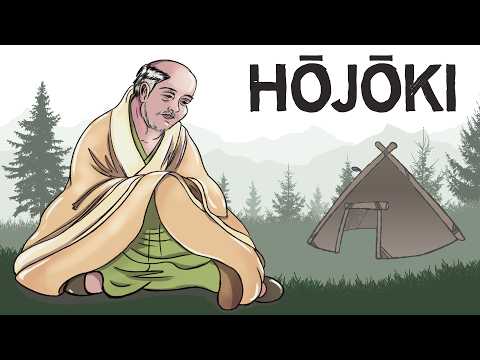
- 1.Kamo no Chōmei wrote Hōjōki after a life of repeated misfortune. Born into a well-connected Shinto family in Kyoto, he was passed over for his father's position, forced from his home, and witnessed fires, famines, and earthquakes — leading him to retreat into a small hut near age 60.
- 2.Impermanence is the central theme of Hōjōki. Chōmei observed that buildings, people, and circumstances are never permanent — those you knew 30 years ago have mostly passed away — mirroring the Buddhist concept of the Eight Worldly Winds, where gain, loss, praise, and blame constantly cycle.
- 3.Chōmei concluded that society is a source of suffering regardless of your position. Wealth brings anxiety, poverty brings resentment, dependence surrenders power, and following social rules constrains you — making participation in the world a losing game for everyone.
- 4.His solution was radical detachment through hermit life. Living in a tiny dwelling in the hills of southeast Kyoto, owning almost nothing, Chōmei found peace in simplicity and nature — reasoning that if you have little, you have little to lose or fear losing.
- 5.Chōmei realized he had become attached to his hut itself — the very escape mechanism. He scolded himself, writing that though he had the trappings of a holy man, his heart was corrupt, having traded worldly attachments for attachment to solitude and simplicity.
- 6.The video's personal lesson is that solitude can become its own prison. The narrator shares his own decade-long retreat into isolation after disappointments, noting that needing solitude as a condition for happiness creates a new dependency — and that a proverbial hut becomes a prison rather than a path to freedom.
Life's too short for long videos.
Summarize any YouTube video in seconds.
Quit Yapping — Try it Free →